Music and Imagery Therapy is a gentle, music-centred method that invites the client into a state of relaxation, during which they listen to pre-recorded music and allow personal imagery to surface.
It combines elements of talking therapy with music listening and creativity, using art materials. The process can support you to both explore difficulties and challenges in your life, and also to build inner resources and strengths to enable you to manage stress effectively. It may bring new insights and understanding of patterns or challenges, and enhance emotional wellbeing and self-worth.
During a session, you will be supported to select an experience to focus upon, to listen to music to deepen your feelings connected with the experience, and then to express yourself creatively using materials like coloured pastels on paper, before reflecting on the process verbally with the therapist. Music can be your own choice, or music offered by the therapist, and can be of any style or genre. No previous experience or talent with music or art is needed, only a willingness to use these methods to explore your feelings and experiences.
As an evidence-based method, it is suitable for short-term therapy that can be effectively delivered online, as well as in-person.
Try Music and Imagery Therapy with WEMA
We are now offering sessions for people with a range of difficulties, including anxiety and depression, low self-esteem, stress, relationship difficulties, and/or bereavement. No previous experience with music or art needed. Sessions are 75 minutes and can be run online.
Normally there would be up to seven weekly sessions with each client, building inner strength and resources as needed each session. If you are interested in Music and Imagery Therapy or want to find out more details, then use the button below to send us a message.
Mini Case Study
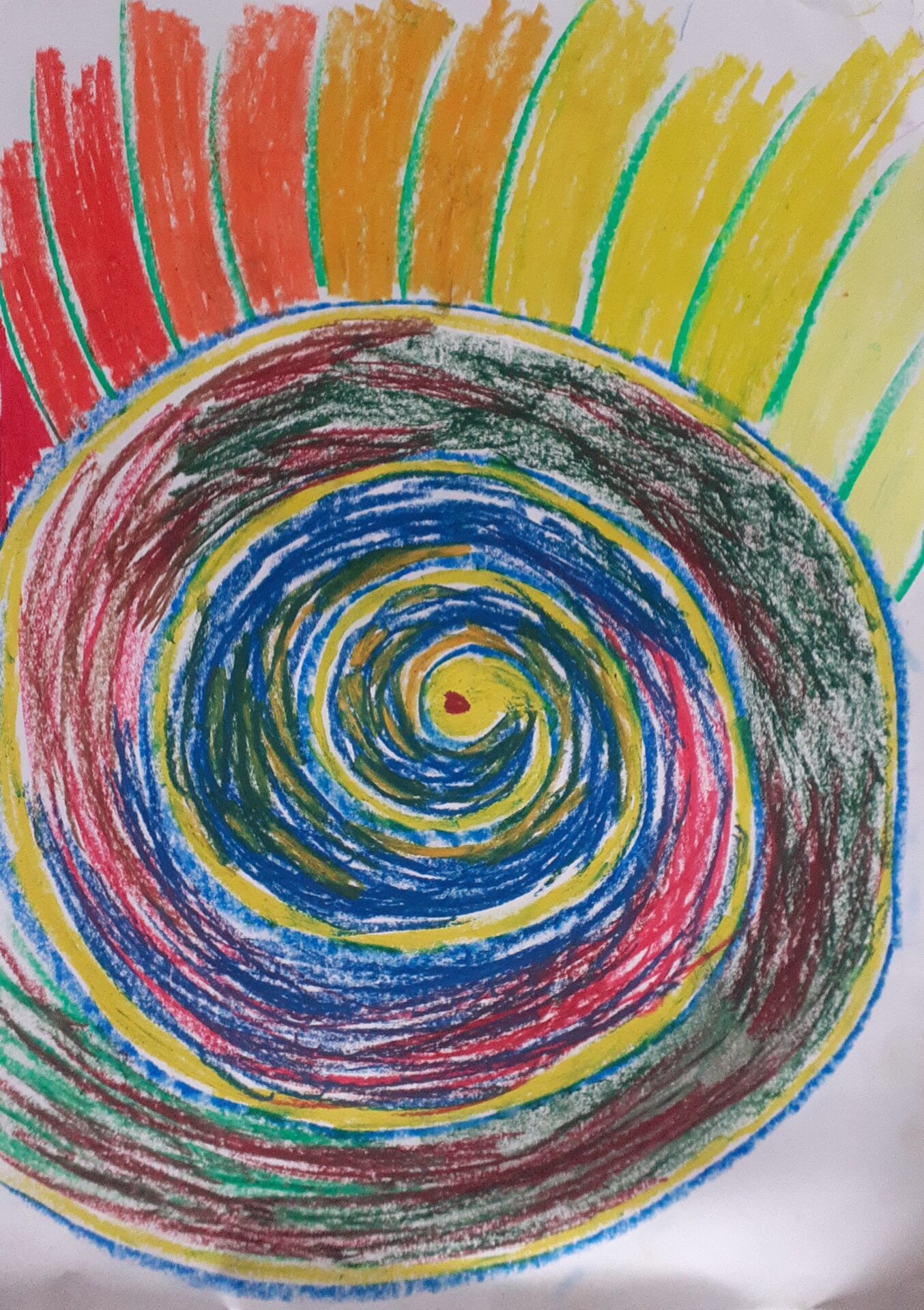
Client: Female, 42
Music Choice: ‘Wind through wings’ Yarabi, Lamine Konte
Outcomes/benefits: Helped to connect with a sense of playfulness, freedom and being part of nature.
Music and Imagery Therapy: Q&A
Is Music and Imagery for me?
Absolutely – it can be for anyone! Music and Imagery is now widely used by anyone wanting a different experience using music as a form of therapy.
What does it involve?
It combines elements of talking therapy with music listening and creative processing using art materials. You will explore some of the difficulties and challenges in your life, and also to build inner resources and strengths to enable you to manage stress effectively.
What happens in a session?
You will be supported to select an experience to focus upon, to listen to music to deepen your feelings connected with the experience, and then to express yourself creatively using materials like coloured pastels on paper.
Can I choose the music?
Yes! And if you need, you will be supported with choosing your music track. If you are not sure, your therapist can make some suggestions – it can be any type/style/genre of music, whatever you enjoy.
What are the benefits?
It may bring new insights and understanding of patterns or challenges, and enhance emotional wellbeing and self-worth. You may feel more well in yourself, and your mood may feel brighter as you understand more what you find difficult and why. Feeling better about yourself can help motivate you to do other things.
Do I need to be able to play music or able to draw?
No, you don’t need any musical or art experience. This kind of music therapy doesn’t involve playing instruments, but does involve listening to music.
Further Information Links
Promotes practice, training and research in Music and Imagery (MI) and Guided Imagery and Music (GIM) in the UK and Europe.
Carine Ries – Music and Imagery Therapist
Carine’s website provides information and a case study on the benefits of Music and Imagery Therapy.