Thousands of young people are getting better access to arts and creative learning, whatever their background, thanks to a pioneering programme from West of England Music and Arts.
New research, published on Tuesday 12 May, shows that WEMA’s Cultural Education Hub has created an inclusive and cost-effective model of arts education, helping schools, creative practitioners and communities work together to give children and young people richer creative opportunities.
Established in 2024, the Cultural Education Hub has been funded by the West of England Mayoral Combined Authority and Arts Council England through the Culture West programme.
With £311,000 of funding over two years, the Hub has worked with more than 130 schools, 9,000 students, 300 teachers and 27 freelance creative practitioners across Bath and North East Somerset, Bristol, North Somerset and South Gloucestershire.
The research focuses on two connected areas of WEMA’s Cultural Education Hub work: Creatives in Schools, which supports creative practitioners to work effectively with schools and young people, and Creative Residencies in Schools, which explores the learning and legacy of longer-term creative arts residencies in primary, secondary and special school settings.
Together, the reports show that WEMA’s Cultural Education Hub is creating genuine impact in schools and communities. Projects supported by the Hub have helped pupils build confidence, strengthen communication, express themselves, develop a sense of belonging, connect with their communities and imagine new possibilities for their futures.
The Hub has supported work using theatre, music, dance, storytelling, visual arts and other creative approaches, with projects shaped around school priorities including oracy, emotional wellbeing, creative careers, community identity, SEND inclusion and curriculum enrichment.
Across the programme, WEMA’s Cultural Education Hub has offered a connected collection of resources and activity, including practitioner training and mentoring, free creative workshops in schools, longer-term creative residencies, teacher CPD, careers events and an open library of toolkits. Subsidy has been targeted towards children and communities who can, and would not normally, have access to these opportunities.
A Year 6 pupil at Bournville Primary School in Weston-super-Mare, a school in the top 1% most deprived areas of England, said of her residency with playwright Toby Hulse: “It made me more confident, because I was picked to do something in front of the whole class. I didn’t think I would ever do that.”
Bournville’s headteacher Marie Berry highlighted the lasting impact on staff: “The teachers in Year 3 and 4 have had a week of CPD alongside Toby. That’s the legacy, that’s the bit where you build that in working alongside those colleagues. Building their confidence and skill set to deliver this moving forward.”
The findings highlight the value of WEMA’s role as a trusted local broker, connecting schools with creative practitioners and cultural organisations in ways that respond to real local priorities.
Rather than simply commissioning one-off arts activities, WEMA has developed a partnership-led model that helps schools access high-quality creative practice, supports artists to work confidently in education settings, and builds lasting relationships between schools, artists and communities.
Simon Lock, CEO at West of England Music and Arts, said: “This research confirms that WEMA’s Cultural Education Hub is making a real difference. Young people deserve access to creativity as a core part of their lives, and this work shows what can happen when schools, artists and communities are properly connected.
“We are not simply putting artists into schools for one-off activities. We are building relationships, supporting creative practitioners, listening to schools and helping young people develop confidence, communication, imagination and a stronger sense of what might be possible for them.
“WEMA is leading the way in showing how cultural education can be rooted in local communities while also offering a model that could have much wider relevance.”
The reports also highlight the importance of supporting the creative workforce. Through mentoring, professional development, peer support and reflection, WEMA’s Hub has helped creative practitioners build confidence and develop their practice in schools and educational settings.
The research suggests that WEMA’s model could be replicated in other parts of the country, offering a way to widen access to arts and cultural education at a time when creativity, inclusion and curriculum breadth are high on the national agenda.
Simon Lock added: “The West of England has a rich creative and cultural life, but not every young person has equal access to it. WEMA’s Cultural Education Hub is helping bridge that gap by building the partnerships, confidence and practical support needed to bring creativity into more schools and communities.
“The research makes a clear case for sustained support for this work, so that more children and young people can experience the benefits of arts and culture as part of a broad, inclusive and inspiring education.”
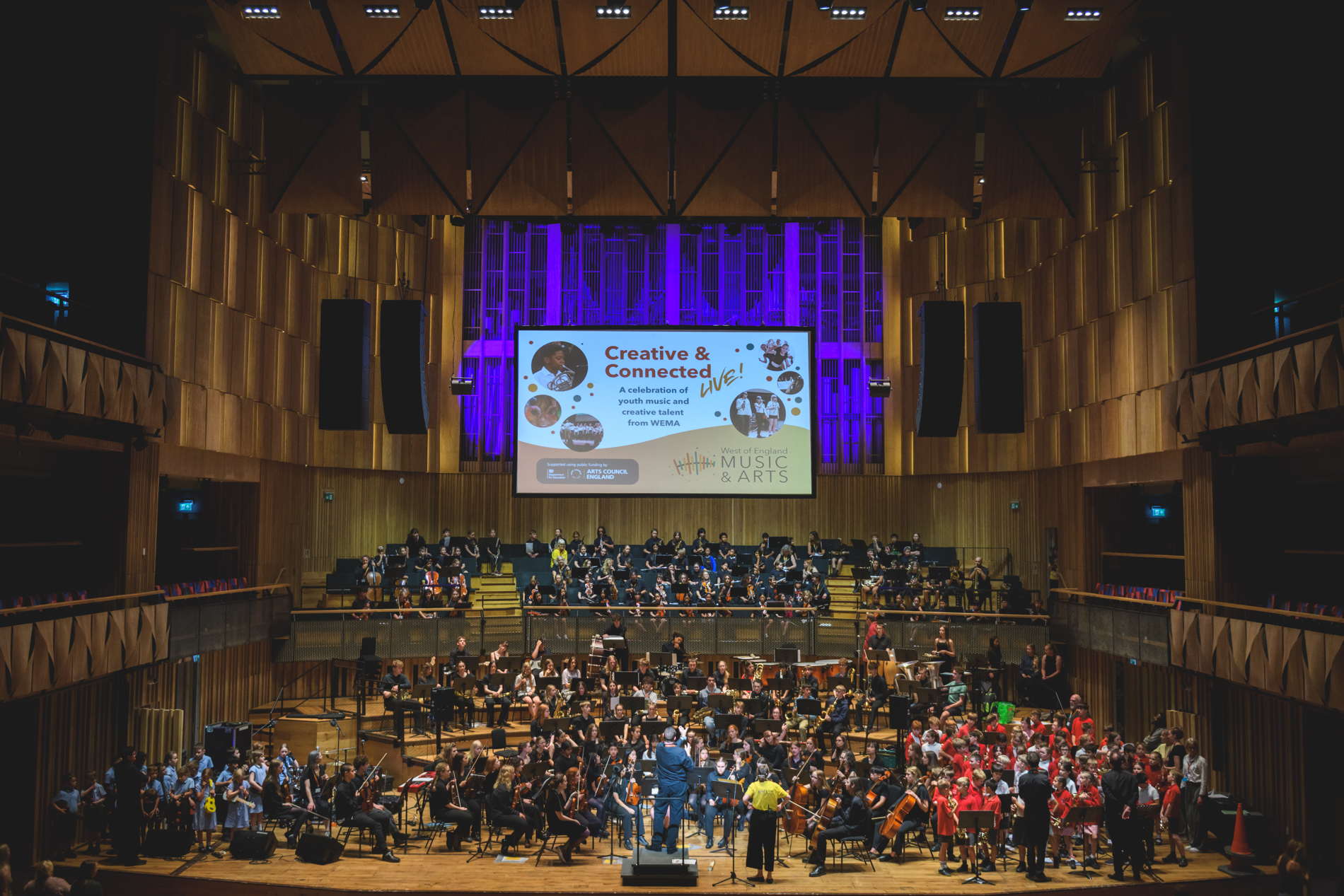
The research was formally launched at a West of England Mayoral Combined Authority event at Bristol Beacon on Tuesday 12 May.
For more information: